
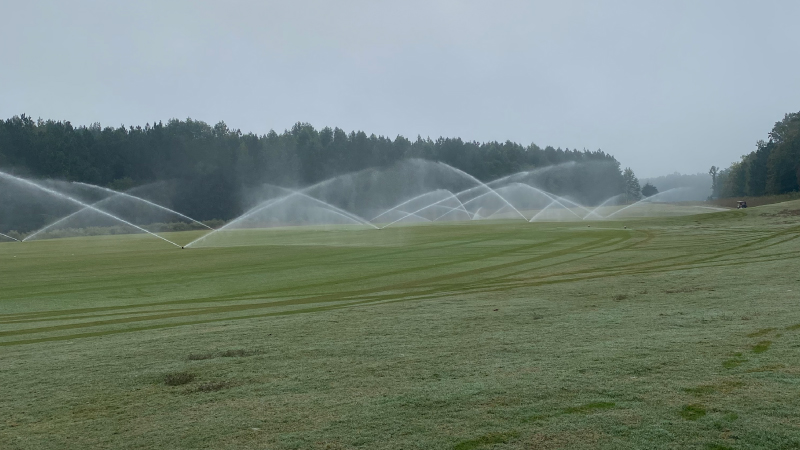
by Wendell Hutchens, PhD
Assistant Professor of Turfgrass Science
University of Arkansas
As spring arrives, grasses are beginning to grow and flourish with the warmer weather and longer days. Just like humans, grass requires food and water. Food for grasses comes in the form of sunlight and nutrients, whereas water for grasses comes in the form of precipitation and/or irrigation. Northwest Arkansas receives ~45-50 inches of rainfall per year, which is above-average nationally (1). This above-average annual rainfall is very beneficial for the grasses we grow in our lawns, parks, golf courses, etc.
Even though this region receives a good amount of rainfall per year, there are still times when irrigation is required to keep grasses alive and healthy. However, there are many practices that can be employed to reduce the amount of irrigation required to sustain the grasses in our lawns and recreational areas.
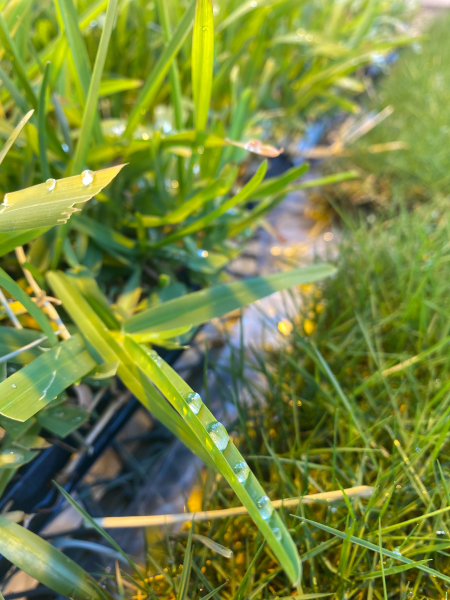 # 1: Plant Drought Tolerant Grasses
Planting more drought tolerant grass species and cultivars can lead to major water savings. Cool-season grasses such as tall fescue and perennial ryegrass are less drought tolerant than warm-season grasses such as bermudagrass and zoysiagrass. Within turfgrass species, there are dozens of different varieties/cultivars with varying degrees of drought tolerance. The National Turfgrass Evaluation Program (NTEP) demonstrates varietal differences between turfgrasses in drought tolerance and many other characteristics. You can access this information for free at ntep.org.
# 2: Water Deeply and Infrequently
It is a common tendency to overwater grasses. Overwatering causes a variety of issues such as increased disease and weed pressure, reduced root growth, and wasted irrigation water. Grasses actually prefer to be watered deeply and infrequently rather than shallowly and frequently. Deep and infrequent irrigation promotes root growth, improves plant health, and reduces irrigation waste.
# 3: Use Rain Sensors or Soil Moisture Sensors
Rain sensors and soil moistures sensors are common add-ons to irrigation systems that allow for more efficient irrigation. A study published from researchers at the University of Arkansas in 2022 showed that soil moisture sensors saved 66% in irrigation for bermudagrass lawns in Northwest Arkansas (2). Even more interestingly, this 66% reduction in irrigation did not reduce turfgrass quality and provided a $200 return on investment (ROI) within the first year! Basically, you can have a high-quality lawn, save 2/3 on irrigation, and get a $200 ROI just by installing these soil moisture sensors.
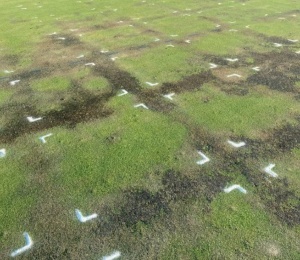 # 4: Consider Wetting Agent Applications
Wetting agents are products that are applied to regulate soil moisture in turfgrass systems. They have been proven to reduce drought stress and lead to water savings under deficit irrigation without compromising turfgrass quality (3). These products are commonly applied on golf courses and athletic fields, but they have utility for home lawns as well.
# 5: Let the Grass Go Brown for a Bit
Brown grass does not necessarily mean dead grass, especially with common warm-season grasses such as bermudagrass and zoysiagrass. Under extreme drought conditions, they can certainly die from lack of moisture; however, this is not often the case. Many times, warm-season grasses such as bermudagrass and zoysiagrass will begin turning brown but quickly green back up with a rainfall or irrigation event.
I hope these tips are helpful to you as we begin the grass growing season!
References:
- National Weather Service. 2026. https://www.weather.gov/tsa/climo_benton#:~:text=Table_title:%20Bentonville/Siloam%20Springs%20Climatology%20Table_content:%20header:%20%7C,%7C%20Jan:%202.8%20%7C%20Annual:%209.2%20%7C
- Sandor, D., Karcher, D., and Richardson, M. 2022. Return on investment and water savings of add-on irrigation sensors for bermudagrass lawn irrigation in Northwest Arkansas. Crop, Forage & Turfgrass Management, 8(2), e20181. https://doi.org/10.1002/cft2.20181
- Xiang, M., Schiavon, M., Orlinski, P., Forconi, A., and Baird, J.H. 2020. Identification of wetting agents for water conservation on deficit-irrigated hybrid bermudagrass fairways. Agronomy Journal, 113(5), 3846-3856. https://doi.org/10.1002/agj2.20450