
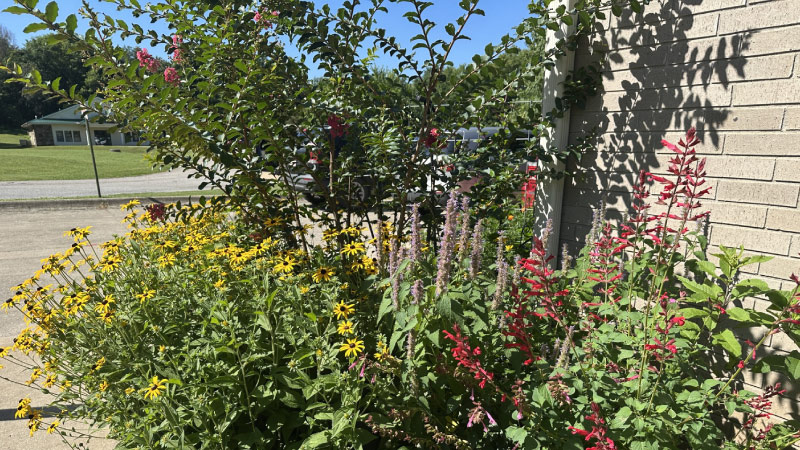
Natives in the Landscape
For years, each spring, I eagerly explored local garden centers and filled my cart with plants that captured my eye with glorious colors. As summer wore on, the water bill soared as I persevered to keep my beauties alive. By fall, those beauties had grown sad and scraggly. (Thinking back now, I rarely saw butterflies.) I was locked into a traditional idea of what I thought was the only choice for a beautiful garden and yard.
I heard about a locally offered Lawn to Landscape 101 class, and it changed my perception of what makes a garden beautiful and functional. Through the class, I was asked to reflect on what is truly important and inspirational to me and then build on my vision. I wanted simple design concepts with sustainable plants, but I still needed motivation.
I was guided to outdoor spaces, public gardens, and parks, and was reminded to use all my senses while observing, so I could walk away with ideas of what I liked and disliked. After building my mental vision, I began to realize what I wanted. I was looking for a calming, natural and alluring space. I wanted a garden that made me feel peaceful. I wanted to see flowers that encouraged a natural world; butterflies, hummingbirds, and bees, and I wanted it to POP with color. I also wanted an area that, once established, would thrive year after year, requiring little maintenance or replacement plants.
Next, I spent time on Pinterest gathering garden ideas focused on my vison and all of us in the class shared our visions. Some members of the class liked structured and linear gardens, my preferences allowed for a little chaos and wildness.
Of course, site selections and soil types make or break a landscape. My chosen landscape spot is full sun with a sandy loam soil that holds some moisture but steadily dries out. Great! I had my design and knew the growing conditions of my location, now it is time to find the right plants.
Structured or wild, native plants will be the foundation for all the gardens. Native plants come in a wide array of sizes, colors, bloom seasons, and growing requirements. With a little planning, a garden can glow with beauty from spring to frost. Best of all, native plants accept the growing conditions of Northwest Arkansas with little fuss; give them a bit of TLC while becoming established, and they will thrive with minimal maintenance. Since my space will dry out as summer comes on, I am choosing natives that like drier conditions.
My list so far includes:
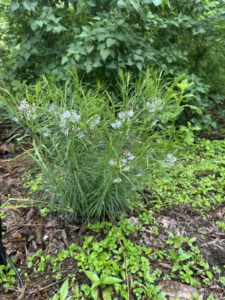
- Aromatic Asters, growing 1-2 feet tall, this drought tolerant plant is covered in small purple daisy like blooms from late summer to frost and the butterflies are crazy for it.
- Anise hyssop or Agastache. Maturing to 2-3 feet tall, it is covered with stalks of blue blooms starting mid-summer that pollinators find irresistible.
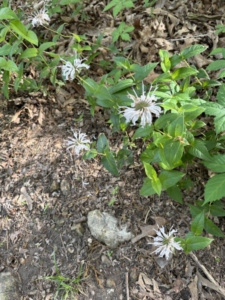
- Bergamot, also known as Bee Balm. In the Monarda family, this tall plant with lavender flowers is a popular nectar source for pollinators, mid to late summer.
- Blanket Flower. For a beautiful pop of red and yellow.
- Coneflowers, Grey Headed and purple, are tall, elegant beauties blooming mid to late summer.
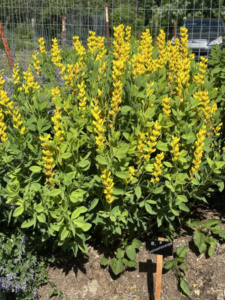
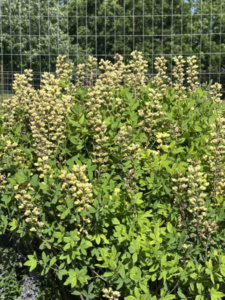
- False Indigos, blue, cream, and yellow. A shrubby plant, the masses of flowers produced late spring to early summer are breath taking and loved by pollinators and hummingbirds.
- Gloriosa daisy, this compact stunning bloomer is a steady bloomer summer into fall.
- Lanceleaf Coreopsis, this medium sized plant produces masses of yellow flowers mid spring.
Do not take my word about the amazing world of native plants, check out local resources like Wild Ones and Master Naturalists. You can find native plants for your garden! Missouri Prairie Foundation keeps a native plant database called Grow Native which is searchable by parameters like plant size, habitat preference, and bloom time. It covers 400+ plants native to the lower Midwest and includes trees, shrubs, vines, grasses, sedges, rushes, and wildflowers suitable for landscaping and creating wildlife habitat.
I am letting go of my traditional garden values which focused on plants that did not find my yard a happy place to live. Just because garden centers sell them, does not mean the plants are suited to grow in our area and may even require intensive care and chemical treatments. I am embracing the native plant vision and am looking forward to a beautiful area that needs little care and water yet welcomes all the pollinators I have been missing in my life.
Susan Watkins is a retired Poultry Science Professor. She joined the Madison County Master Gardeners in 2020.