
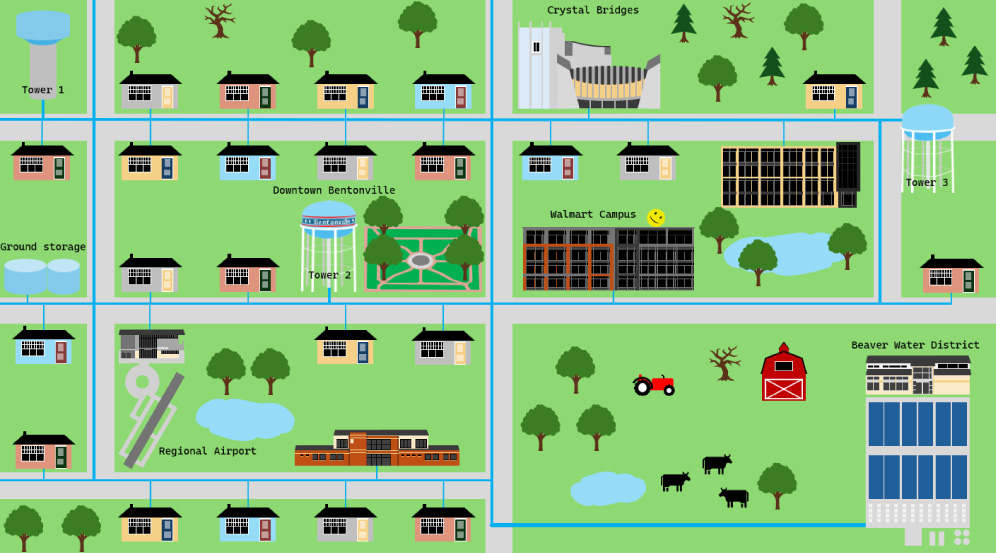
What are Hydraulics?
Hydraulics is the study of fluids in motion or under pressure. Pressure is the magic that gives you instant water whenever you turn on the kitchen sink. The energy behind water can vary greatly, which determines whether your hot shower feels like a slow dribble or a sharp spray. This post covers 2 of the basic principles of hydraulics a water distribution system uses to get water to your house the moment you need it: Force (pressure) and Speed (velocity).
Pressure and Force
Pressure is the force applied to water. Pressure here in the USA is measured in Pounds per Square Inch, or PSI. To illustrate this force, imagine a brick weighing 1 pound, placed on a 1-inch table. The amount of force is exactly 1 PSI, and adding a second brick would be 2 PSI. If you were to have a single brick on a larger 2-inch table, the force would be spread out to that surface, so it would be half the force or 1/2 PSI. This pressure in the water pushes against itself and the inner pipe surface all around it.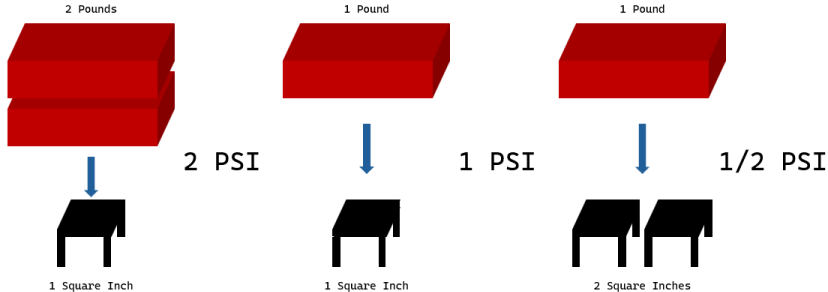
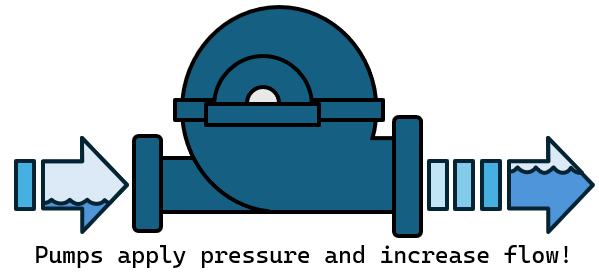
Force is applied to a water system in a couple of ways. The first way is pumps: Spending energy to drive a motor and pump to pull water from one side and to force it through the other increasing pressure and flow of water. Pumps are used to move water from Beaver Water District to their customer cities like Bentonville. The second application of force is found naturally with gravity, specifically the force applied by the height of water, which is why water towers exist! We will explore the magic of water towers in a future post.
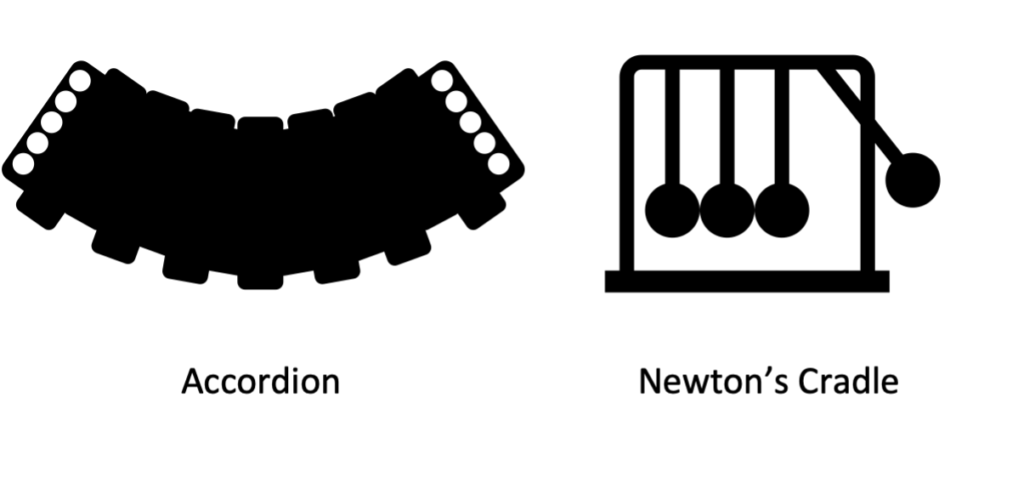
An important characteristic of water is water does not compress, it pressurizes. Pressure is applied nearly instantly. To visualize this, imagine the difference in movement between an accordion and a Newton’s cradle. Push an accordion together and it squeezes and bends; move the outer ball of the Newton’s cradle and it transfers its energy to the other side immediately.
Water Hammer
Change in pressures requires a great deal of care to protect the distribution system. Abrupt changes in pressure in a distribution system are called water hammer. Water hammer is exactly what it sounds like, because it’s like slamming your pipes with a massive hammer. Moving water has momentum, so when an abrupt change (a pump starts, or a valve slams shut) happens It damages pipes and joints and can cause micro fractures in water lines that can blow up into catastrophic leaks. Modern technology and good hydraulic practices create several ways for operators to cushion and prevent water hammer.
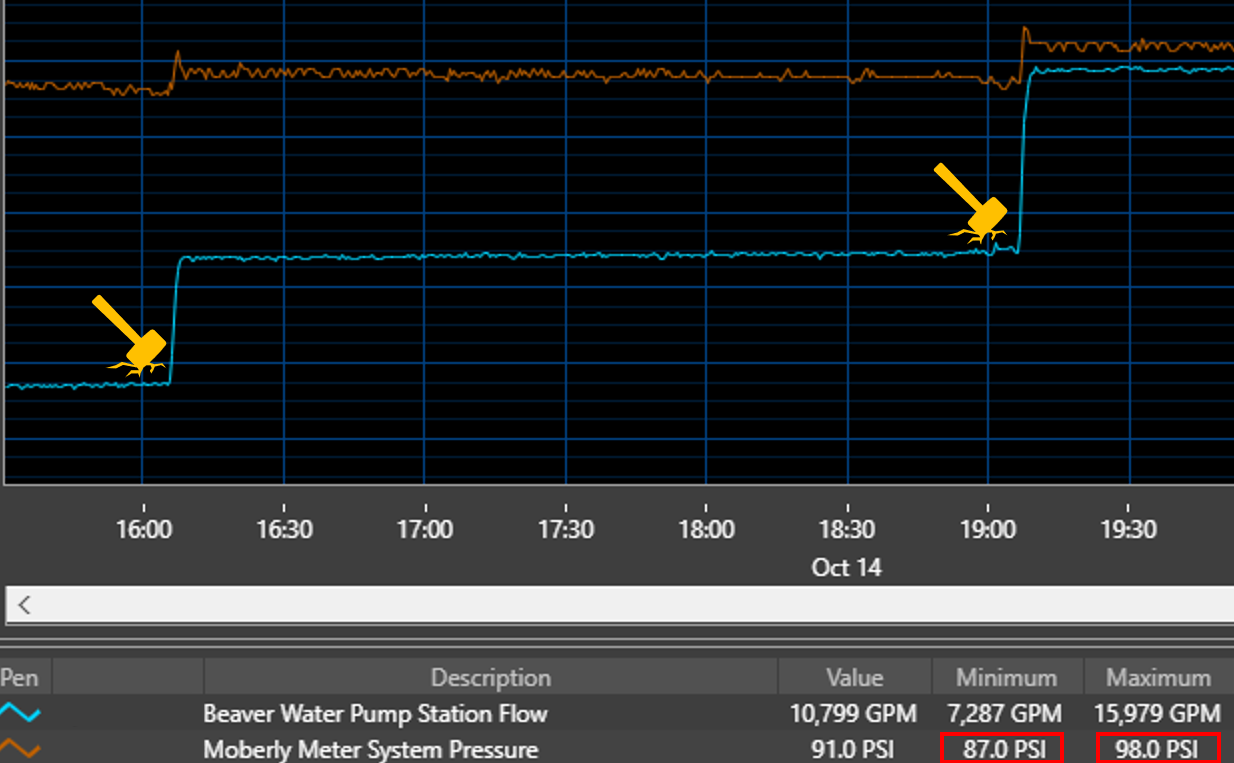
This chart shows how quick and sudden a change in pump operations can affect the distribution system. The blue line is amount of water leaving Beaver Water District (BWD), and the orange line is the system pressure in Bentonville. Pay attention to the minimum and maximum values: Those stair steps upward are a change in pump flows, and while necessary to supply water to a thirsty city, do cause a punch to every pipe in the system.
Velocity and Movement
Velocity is the speed at which the water moves. While pressure can hit hard and fast, velocity is slow and steady in water lines. The velocity of water is typically measured feet per second (FPS). The speed of water moving through water can depend on a lot of factors, like the pressure applied vs the water being used/relieved. If everyone in Bentonville flushed every toilet at once, there would be a moment of extreme velocity as water rushes to fill the void left behind by the sudden displacement. A good average speed for a water line is 2-4 FPS. Anything less than 1 affects water quality, because the water can get old and stale. Anything more than 5 affects distribution quality by increasing friction and damage from water hammer. 2 feet per second is equal to 1.36 miles per hour which is a stark difference to the near instant changes from force. Picture a rubber duck floating on the surface of a river, that speed would be close to how fast the water is moving in a pipe, despite bearing high water pressure like 60psi.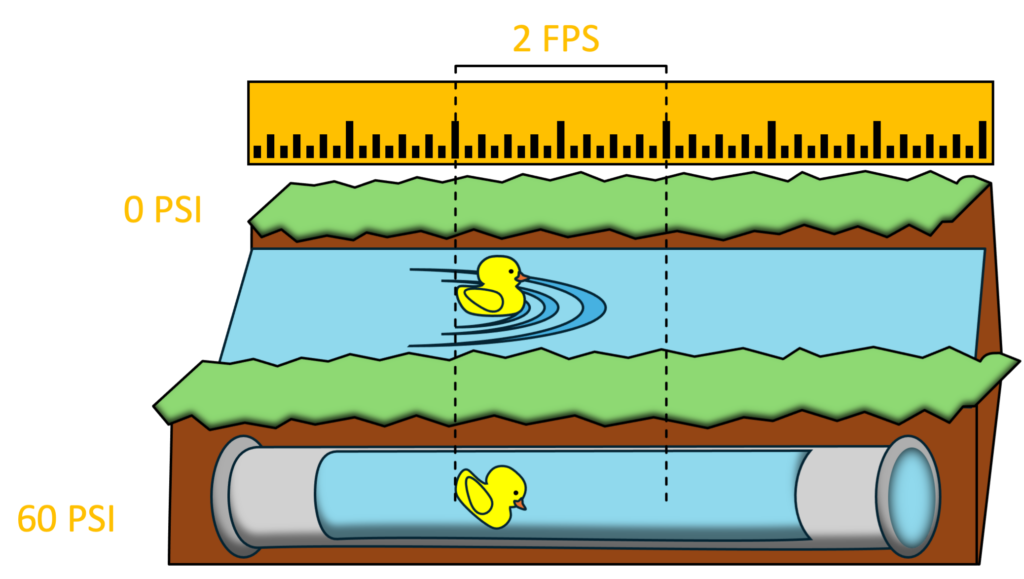
On April 23rd, 2025, the City of Bentonville partnered with Pure Technologies to perform a special form of leak detection called a Smartball inspection. The Xylem Smartball is a sensor (that is also a ball and is smart) that listens to the tiny sounds that leaks make. It was inserted directly into the beginning of the water line at BWD and moved all the way to the City of Bentonville and ejected through a fire hydrant. The sensor moved 73,213ft, or 13.9 miles in the span of 10 hours and 40 minutes. That translates into 1.9 FPS, or a lazy 1.3 miles per hour!
Pop Quiz
How long does it take for water to travel from the treatment plant (BWD) to your home in Bentonville?
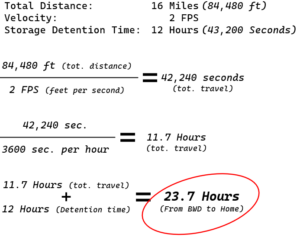
This is what we know: It’s about 14 miles from treatment facility to city Then let’s assume another 1 mile of pipe to get to a storage tank where it will stay for 12 hours (this wait is called detention time). The flow when the water is moving will be at a constant rate of 2FPS.
The answer is about 23.7 hours total. This is 11.7 hours of traveling and another 12 hours of waiting in detention. The safe potable water you use tonight was only in the system for a day before it got to you, and only a couple days prior to that it was raw lake water! In reality, the water gets all mixed around in the distribution system and is impossible to determine if the water’s exact age is in the system.
Conclusion
Water hydraulics are challenging to understand at best, which is why it feels like magic when you flush a toilet and it refills itself even when the power is out. The driving concepts of pressure and velocity are both in sync and act completely distinct from each other. The careful balancing act of both powers is how harmony is achieved for the City of Bentonville. Even with the most careful operations, weak points in any distribution system will eventually break under pressure. The delicate system requires constant monitoring and attention, but technological advances give us greater information to spot weak points before they break and give us stronger material that will last longer and cause less friction. The next time you fill a glass of water, you can appreciate a little bit more how it got there.