
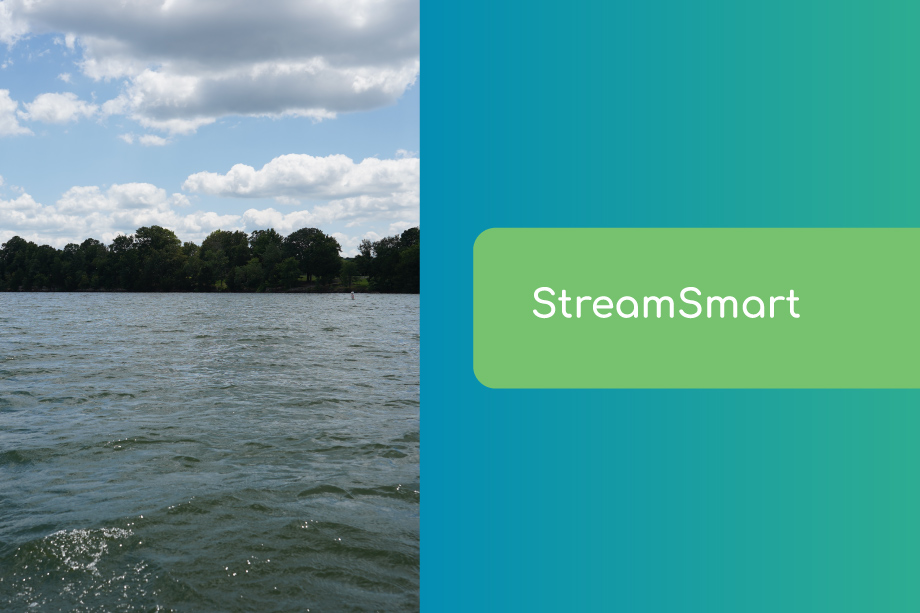
How Small Streams and Many Volunteers are Monitoring Beaver Lake
Beaver Lake is the drinking water source for more than 600,000 Arkansans, and protecting it goes beyond the lake itself — it takes an understanding of what is happening in the streams and creeks that feed it. For more than a decade, the StreamSmart Citizen Science Program has helped fill critical monitoring gaps across the Beaver Lake watershed by training volunteers to collect water quality data from smaller tributaries that are not regularly monitored by other organizations. The program, coordinated by H2Ozarks and funded by Beaver Water District, has created one of the region’s most extensive datasets on headwater streams. This has resulted in one of the longest-running, highest-resolution water quality datasets in the region.
Today, 37 StreamSmart volunteers monitor 15 sites across the watershed, collecting samples that are analyzed for nutrients, sediment, and other key indicators of stream health. Working under a state-approved Quality Assurance Project Plan and partnering with a certified laboratory, this data is usable for real management decisions and source water protection efforts. Beyond data collection, volunteers also monitor aquatic insects, which serve as important indicators of overall stream health.
The program’s staying power comes from strong partnerships. StreamSmart is made possible by collaborations between Beaver Water District, H2Ozarks, the Arkansas Water Resources Center, and community partners such as the Northwest Arkansas Master Naturalists. This network allows each organization to contribute their expertise while creating meaningful opportunities for residents to become directly involved in protecting local water resources.
This long-term, tributary-level data is already answering real questions. War Eagle Creek, Beaver Lake’s largest tributary, was listed in 2022 as an impaired waterway for low dissolved oxygen, but the exact cause was unclear. StreamSmart’s six sites in that subwatershed — monitored since 2013 — are helping narrow down where nutrient pollution is coming from and revealing statistically significant increases in nitrogen and phosphorus. These are important insights that can help resource managers better understand conditions affecting streams and downstream water quality.
As Northwest Arkansas continues to grow, programs like StreamSmart demonstrate how community involvement can strengthen source water protection and support informed management decisions.
This is a summary of a full article recently published in the North American Lake Management Society (NALMS) magazine Lakeline, which further explores how the program operates, the partnerships that sustain it, and the specific findings emerging from years of volunteer-collected data. Readers interested in the future of Beaver Lake and the role of citizen science in watershed protection are encouraged to read the complete story.