
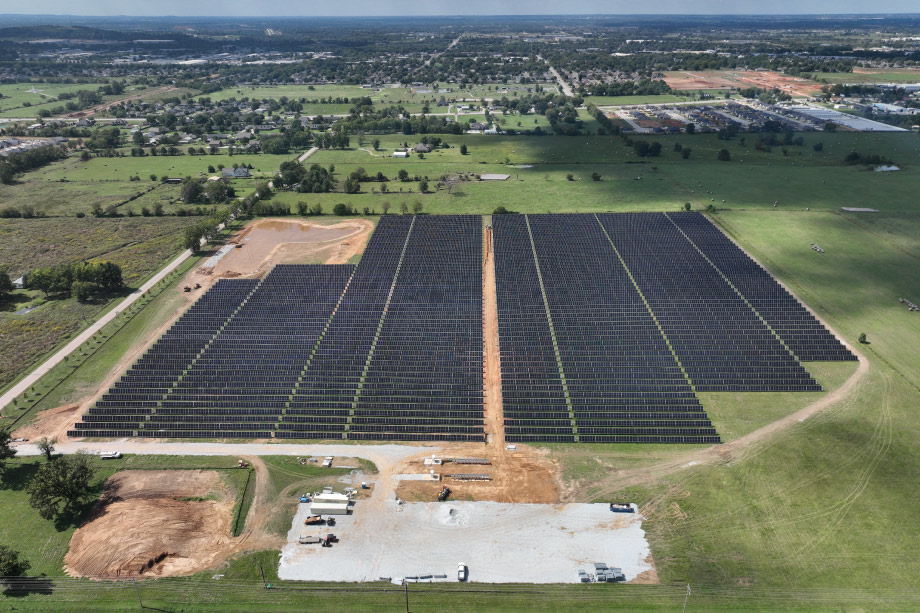
The BWD solar facility has successfully completed its initial testing phase, with final completion now actively underway. As part of this process, weather stations and single axis tracking systems are currently being installed. Once fully operational, these enhancements will enable the solar panels to continuously monitor real-time irradiance levels, allowing the trackers to follow the sun’s path across the sky. This intelligent tracking capability will optimize electricity production by maximizing solar exposure throughout the day, delivering higher overall energy yields.
A key feature of the facility’s advanced tracking technology is its automated protective stow mechanisms, which position the panels to safeguard against extreme weather events and minimize potential damage. For instance, during periods of high winds, the system automatically rotates the panels into a horizontal position to reduce aerodynamic stress and wind loading on the structure. In case of hail, the trackers shift to a steep-angled position; a high-tilt orientation designed to deflect hailstones and lessen direct impact on the panel surfaces. This further protects the modules from costly breaks or microcracking. These sensor-driven responses integrated with on-site weather monitoring ensure the system’s long-term durability, reduce maintenance needs, and maintain reliable energy output even in challenging conditions.
An added advantage of the solar site is its low maintenance requirements. Minimizing upkeep makes it a highly cost-effective asset for the water treatment plant. The system typically needs only two scheduled visits per year. These focus on three simple tasks: mowing grass under and around the arrays to avoid shading or fire risks, greasing rotation points to ensure smooth tracker operation, and inspecting electrical components (inverters, wiring, connections, sensors) for any signs of wear or corrosion. This minimal biannual routine keeps the installation running efficiently over its lifespan. Automated tracking, weather-based stowing, and built-in diagnostics further reduce hands-on work by optimizing performance and protecting components with little human intervention. Overall, the low upkeep reduces long-term costs, minimizes site disruption, and delivers reliable clean energy with minimal effort.